

"The Day I Realised the Perfect Office Chair Wasn't Enough"
By Chris Abay
For over twenty years, I believed that if we could better support the human body, we could improve people's lives.
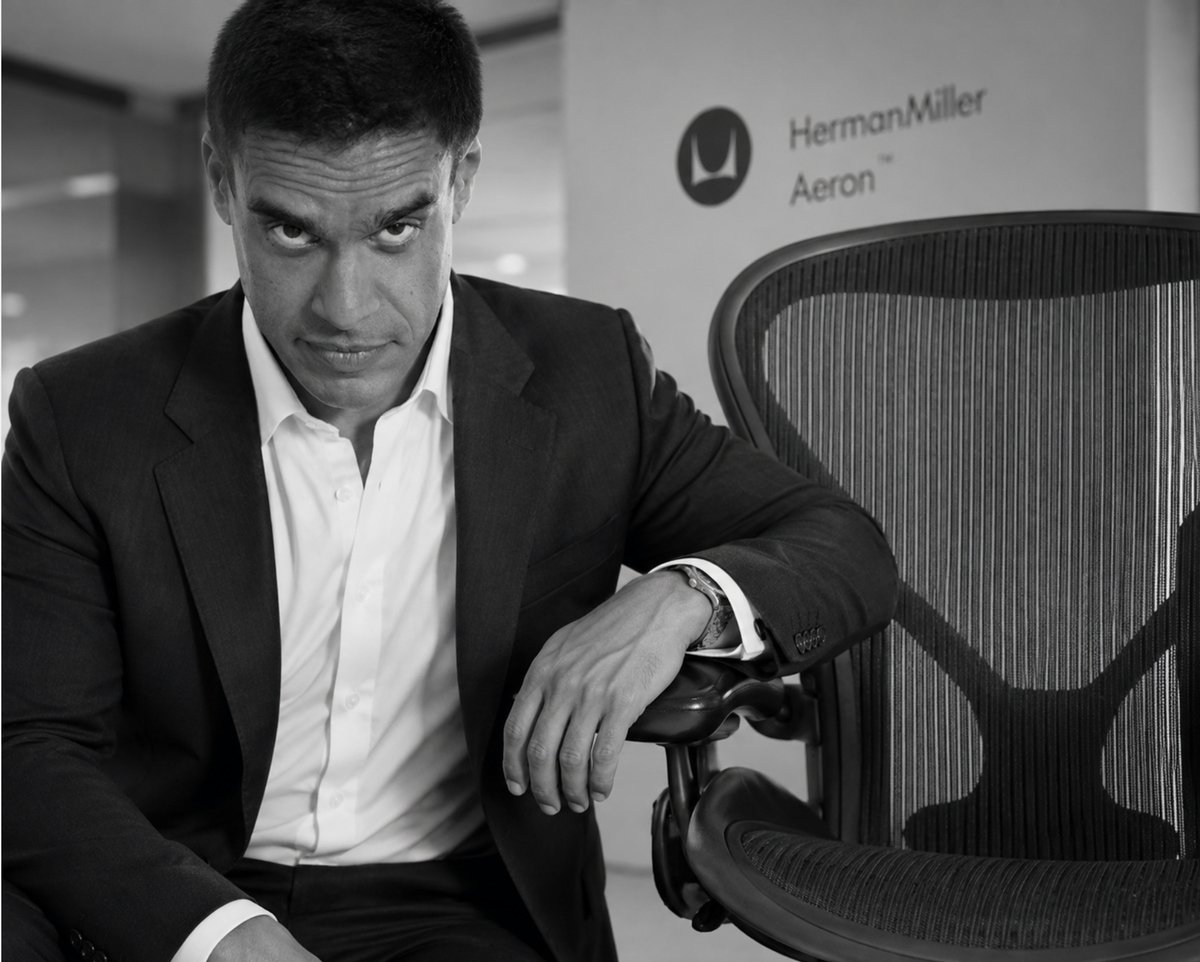
Long before I taught yoga, I worked in workplace ergonomics. I had the privilege of introducing some of the world's most respected task seating (office chairs at £1000 a pop) into UK businesses, including the Herman Miller Aeron, Steelcase Think, Vitra ID and Humanscale Freedom chair. My work took me into multi-storey corporate offices, sky view boardrooms, hospitals, universities and the headquarters of some of the country's largest organisations.
Every day, I met people who spent eight or ten hours sitting continuously at a desk, often earning so much money for their employees they never shifted their attention from the task in hand.
The challenge was always the same.
How do we create a working environment that asks less of the human body? That causes less slow-burn, long term damage. That causes less pain, discomfort and sick days.
That question fascinated (or as I like to say now, fascia-nated J) me. It still does.
The companies I worked for invested millions, globally, in developing “ergonomic solutions” meaning they made stuff that, if used correctly, reduced the strain the sitting for long periods of time places on the body.
The chairs produced were designed to create enough support and movement so that issues all the way from eye strain to debilitating back ache could be mitigated. But the real issue wasn’t as simple as that.
The chair was never the whole answer
One of the biggest misconceptions about ergonomics is that it is simply about buying an expensive chair.
It isn't.
Good ergonomics is about understanding the human body.
A well-designed chair supports the pelvis, encourages movement, reduces unnecessary muscular effort and adapts to the individual rather than forcing the individual to adapt to it.
These things matter.
I still believe they matter.
If I were working in an office today, I would still want people sitting in well-designed furniture.
But over time, I began to notice something.
Even in beautifully designed workspaces, people still became stiff.
Their shoulders still tightened.
Their hips gradually lost mobility.
Their breathing became shallower.
Their necks became guarded.
Used well, good ergonomics can reduce unnecessary strain.
But, it didn't completely restore the body's natural capacity to move.
Long term, hyperfocused inactivity changes the body.
The body quietly adapts
One of the remarkable qualities of the human body is its willingness to adapt.
Whatever we ask it to do repeatedly, it becomes better at doing.
If we spend years reaching for a keyboard, our shoulders adapt.
If we spend years sitting with our hips flexed, our hips adapt.
If we spend years barely rotating our spine, our spine slowly forgets that it was designed to rotate.
This isn't a fault.
It's biology. It’s even evolution.
The body is simply responding to the life we ask it to live.
For many years I believed that better supported movement was the answer. That if the right chair could support the body whilst encouraging movement we would get closer to the goal. To make the workplace healthier and give people the chance to enjoy life beyond work.
Today I think support is less than half of the conversation because. The value of movement.
Movement as medicine to correct the poison of sitting for long periods of time.
Yoga changed the question
When I first found yoga whist living in Sydney, I wasn't looking for a new career.
I was simply discovering another way of understanding the body.
What fascinated me wasn't flexibility.
It wasn't advanced postures, although my ego lover those!
It wasn't achievement.
It was that movement itself seemed capable of changing how people inhabited their bodies.
People stood differently.
They breathed differently.
They seemed to move through life with less effort.
That intrigued me far more than touching toes ever could.
Eventually I discovered Yin Yoga and later Myofascial Release.
Something clicked.
The years I had spent studying workplace ergonomics suddenly met a completely different way of thinking about human movement.
From supporting the body to educating it
In ergonomics we often ask:
"How can we reduce the demands placed upon the body?"
In Myofascial Release, I find myself asking something slightly different.
"How can we help the body rediscover the movements it has slowly forgotten?"
The distinction is subtle, but profound.
One approach primarily protects the body from unnecessary load. The other gently reminds the body of its extraordinary adaptability.
Neither replaces the other.
They complement one another.
There is no perfect posture
One lesson has become increasingly clear to me.
There is no single perfect sitting posture. No amount of adjustment will deliver the “perfect sitting position”
There is no perfect chair.
There is no perfect standing desk.
The healthiest position, really is, often simply “the next one”.
Because the next position requires movement.
And, movement really is medicine. Two rounds of orthopaedic surgery on my body have taught me that. Surgery has taught me a lot about the humanform.
The body loves variety.
It thrives on gentle movement.
It responds remarkably well when we stop forcing it into shapes and instead give it time, attention and curiosity.
Why Myofascial Release feels different
People often arrive at YinWave hoping that Myofascial Release will fix a painful shoulder, tight hips or an aching back.
Sometimes those things improve. Sometimes they improve dramatically.
But that isn't really what keeps people coming back.
Over weeks and months something quieter begins to happen. They move through daily life with a little less resistance.
They notice they get out of the car more easily.
They sit at their desk without constantly twitching in discomfort.
Walking becomes lighter.
Breathing feels fuller.
The body begins to feel less like something that needs managing and more like somewhere comfortable to live.
Not because it has been fixed in “the perfect ergonomic position”
But because it has been patiently reintroduced to movement.
Looking back
When I think about my career now, I don't see two different professions.
I see one continuing conversation. Iterations of the same “why” I have carried for decades.
The younger version of me was trying to help people feel better at work by changing the environment around them.
Today, I try to help people feel better by changing the relationship they have with their own bodies. Through movement yes, but perhaps more importantly through awareness.
Movement is where the journey of Yoga begins.
Awareness is where we find freedom.
A deep respect for the remarkable design of the human form.
The chair mattered.
It still does.
But I've come to believe that no chair, however beautifully engineered, can replace a body that is gently cared for, regularly moved and patiently listened to.
That isn't a quick fix.
It is a lifelong practice.
